



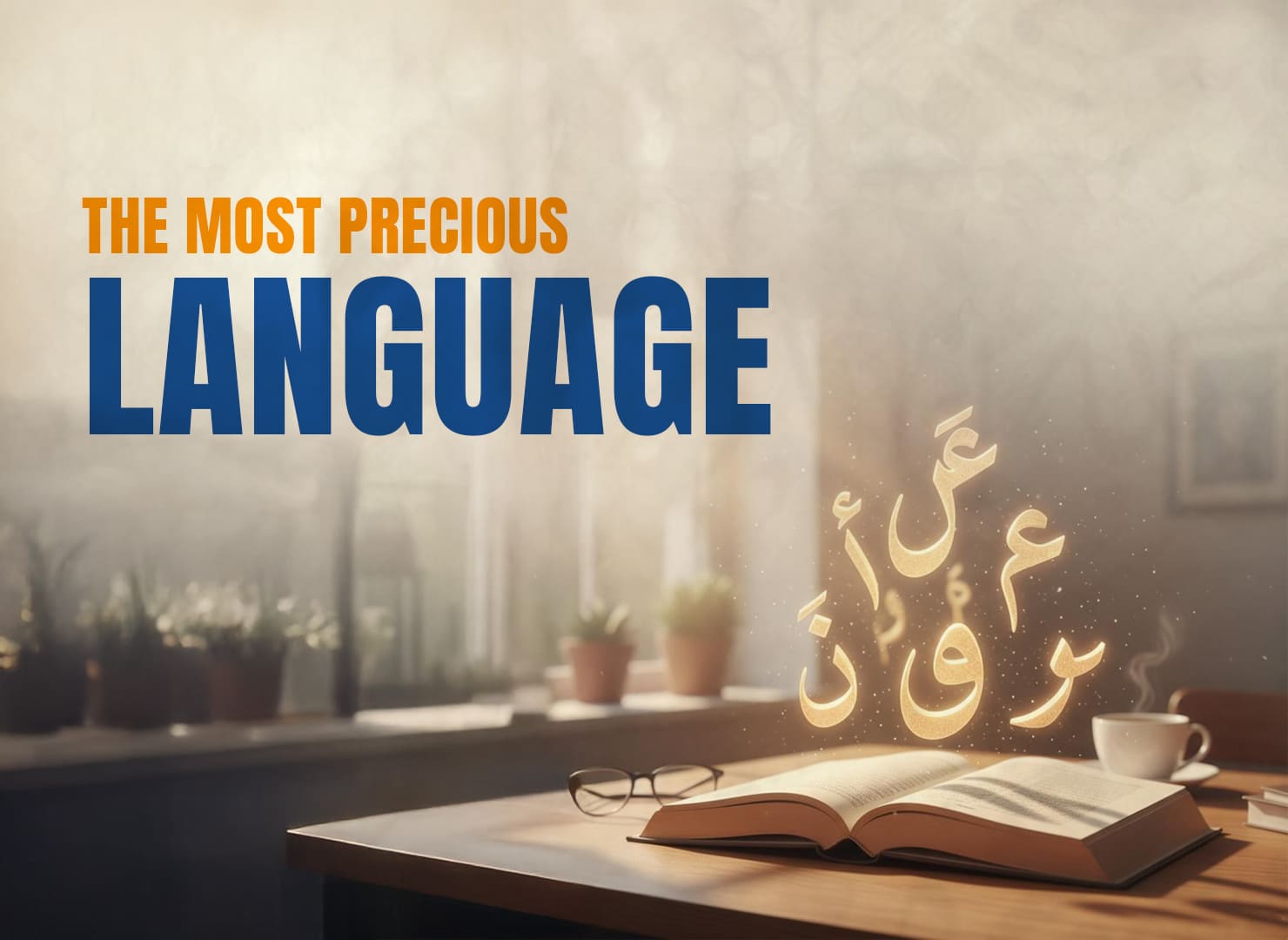
The Importance of Learning the Arabic Language
The Arabic language is not only a means of communication — it is the language of the Qur’an, the language Allah chose for His final revelation to humanity. To learn Arabic is to open the door to understanding the words of Allah more deeply, to connect with Islam on a heart level, and to experience the beauty and richness of our faith.
1. The Language of the Qur’an
Allah (SWT) revealed the Qur’an in Arabic — precise, eloquent, and full of meaning.
When a student learns Arabic, even at a basic level, they begin to:
- Understand verses while reading or listening
- Feel the emotional and spiritual impact of the Qur’an
- Connect personally with its message, rather than relying only on translation
This turns recitation into reflection, and memorization into living guidance.
2. A Gateway to Understanding Islam
Arabic allows a Muslim to access:
- Islamic knowledge
- Authentic hadiths
- Classical and modern Islamic scholarship
Even simple vocabulary can make prayer more meaningful and daily worship more present and aware.
3. A Global and Living Language
Arabic is spoken by over 400 million people across the Middle East, Africa, and Asia.
It is a key language for:
- Travel and communication
- Business and trade
- Cultural and academic exchange
Learning Arabic connects students to a rich and diverse global community.
4. Strengthens the Mind and Memory
Research shows that learning a new language:
- Enhances memory
- Boosts focus and creativity
- Strengthens problem-solving skills
Arabic, with its patterns and structures, trains the mind to think more deeply and accurately — especially beneficial for children and young learners.
5. A Source of Barakah (Blessing)
Learning Arabic with the intention of understanding the Qur’an is an act of worship.
It brings light, tranquility, and blessing into one’s life, home, and heart.
How We Teach Arabic at Al-Nour Academy
We understand that every learner starts at a different level, so our curriculum is structured in clear stages:
Beginner Level
- Learning the Arabic letters and correct pronunciation
- Recognizing how letters connect to form words
Intermediate Level
- Reading fluently with tashkeel
- Building foundational vocabulary
- Forming short sentences with confidence
Advanced Level
- Expanding vocabulary and grammar
- Reading and understanding longer texts
- Writing meaningful paragraphs and expressions
Qur’anic Arabic vs. Colloquial Arabic
We teach both Fus-ha (Classical Qur’anic Arabic) and Colloquial Arabic.
Classical Arabic is rich, precise, and used to understand the Qur’an and Islamic studies.
Colloquial Arabic is the everyday spoken language used for communication and conversation.
Both support students in expressing themselves confidently and engaging with the Muslim world.
Begin Your Arabic Journey with Us
At Al-Nour Academy, we make learning Arabic enjoyable, interactive, and meaningful — for children and adults alike.
Our goal is not only to teach the language, but to make the student love it.
Let Arabic be the bridge that connects your heart to the Qur’an, your identity, and your roots.
Enroll in our Arabic Program today.
Your journey begins with one step — and we’re here to guide you through it. 🌿✨